

Key Takeaways
- Return policies directly affect purchase conversion: 92% of shoppers say an easy return policy influences their buying choices. 62% say they probably won’t shop with a retailer who has a bad return experience. Your return policy is not just an operational document: it is a conversion lever.
- Clarity beats generosity: A strict but clear return policy performs better than a generous but vague one. Customers can plan around restrictions they understand. Ambiguity creates anxiety that shows up as support tickets and abandoned carts.
- Placement is as important as content: A good policy that customers can’t find is as frustrating as a bad one. Return policy should be visible at: product pages, checkout, order confirmation email, and your store footer.
- Automate enforcement, not exceptions: The goal is a policy clear enough to automate enforcement of the standard cases, so your team only handles genuine exceptions. A returns management system that enforces your rules at initiation eliminates manual review of every request.
- CX teams own the policy language. Ops teams own the enforcement: CX writes the customer-facing policy. Operations configures how it is enforced in the returns system. Both teams need to be aligned: a policy that cannot be enforced consistently creates exactly the ambiguity and exceptions the policy was supposed to prevent.
What is a Return Policy?
A return policy is a set of rules that define the conditions under which customers can return products, the timeframe for doing so, and what resolution they can expect. It typically covers: eligible products, return window (how many days after purchase or delivery), required condition of the item, how the customer initiates the return, and what the customer receives: full refund, exchange, or store credit.
A return policy serves two purposes simultaneously. For customers, it sets expectations and reduces purchase anxiety. For operations, it defines the rules that get encoded into your returns management system and enforced at scale.
What to Include in Your Return Policy
Return eligibility and timeframe
Define clearly: which products are eligible for return, which are not (final sale, customized, opened hygiene products, etc.), and how long the customer has. Standard e-commerce windows range from 14 to 60 days, with 30 days being the most common.
Be specific about when the clock starts: from the date of purchase, or from the date of delivery. These are different by 3-7 days on average and that gap generates support tickets.
Required condition of returned items
Specify what condition items must be in: original packaging, tags attached, unused, or with original accessories included. Vague language like ‘reasonable condition’ generates disputes. Specific language like ‘unworn with all original tags attached’ is enforceable.
How customers initiate the return
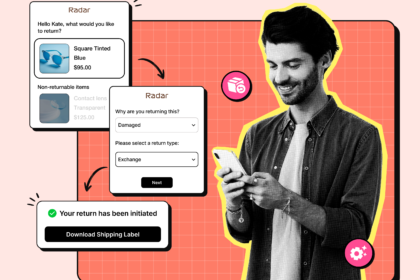
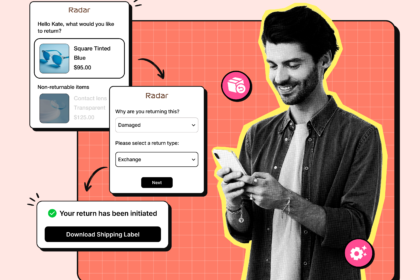
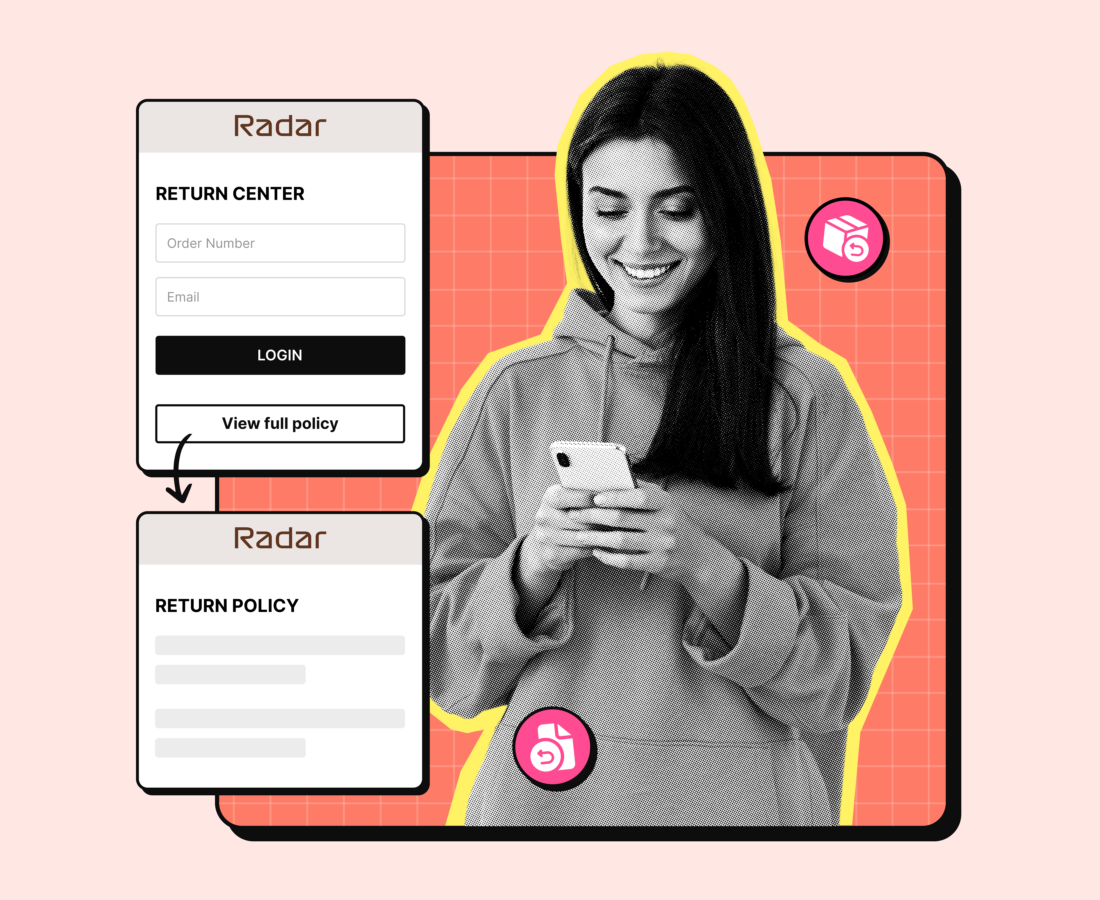
This is where most return policies fail. Many policies say ‘contact us to initiate a return’: which means every return generates a support ticket. The better approach is a self-serve returns portal where customers initiate without contacting support. If you offer this, link directly to it from the policy.
What the customer receives: refund, exchange, or store credit
Define your resolution options clearly. If you offer all three, specify any conditions: exchanges only for in-stock items; store credit with a 10% bonus; refunds to the original payment method within 7-10 business days. The more specific, the fewer ‘when do I get my money back’ tickets you field.
Who pays for return shipping
Offering free return shipping is a competitive advantage and increases customer satisfaction. If customers pay for return shipping, clearly communicate this and provide options. Consider offering free return shipping for defective items or exchanges even if standard returns are customer-paid: this distinction reduces return shipping disputes significantly.
Fees and deductions
Restocking fees, handling fees, and original shipping non-refundability are all legitimate: but must be disclosed clearly. Fees discovered only after a customer has initiated a return generate the worst kind of negative reviews and chargebacks.
The Gap Between Policy and Enforcement
Most return policy problems are not bad policy. They are enforcement gaps: where the policy says one thing and the actual returns process does something slightly different, creating inconsistency that customers notice and exploit.
The two failure modes:
- Under-enforcement: Team members approve returns that fall outside policy because they want to avoid conflict or are too busy to check. This trains customers that the policy is not real.
- Over-enforcement: Team members apply policy rules incorrectly or inconsistently, denying legitimate returns and generating disputes and chargebacks.
The solution is automating policy enforcement at the point of return initiation: before the label is generated. A returns management system that has your return window, eligible products, and condition requirements coded in will apply those rules consistently to every single return request, regardless of who processes it or what day it is.
When the standard cases are handled automatically, your team only needs to engage for genuine exceptions: items that fall outside the automated rules and actually require human judgment.
Best Practices for Writing and Presenting Your Return Policy
Use plain language
Use simple, straightforward language, avoiding legal jargon or complex terminology. Customers should be able to understand the terms and conditions: eligibility for returns, timeframes, acceptable product conditions, and any associated fees: without needing to re-read.
Make it easy to find
A return policy is only effective if customers can find it. Place it prominently in the website footer, alongside shipping information, on product pages, and in order confirmation emails. Include it in your help center FAQ. The easier it is to find, the more transparent and trustworthy your business appears.
Offer flexibility within structure
While it is important to have clear guidelines, offering some flexibility within your return policy can improve customer satisfaction. Consider extending return windows in some situations or offering options like store credit or exchanges in addition to refunds.
Plan for peak season
High-volume periods like holidays can put a strain on your return processing capabilities. Adjust your return policy and communication strategy to accommodate the increased demand. Consider extending return windows to account for potential delays in shipping and processing during peak season.
Enforcing Your Policy at Scale
Efficiently managing returns is essential for both customer satisfaction and your bottom line. Investing in a returns management system, like LateShipment.com’s OneReturn, can automate the entire return process.
A returns management system can help: track returns, generate return shipping labels, manage refunds and exchanges, enforce your return policy rules automatically, and provide valuable data insights into return reasons. This reduces the administrative burden related to returns and eliminates the enforcement inconsistency that generates disputes.
Choose fonts and colors that are easy on the eyes, especially on mobile devices. Highlight key links and ensure your policy aligns with your brand’s style guide.
So, what exactly should your return policy include? Let’s find out.
Return Policy Templates by Business Type
Use these as starting frameworks. Every field in brackets should be replaced with your specific terms.
Standard E-Commerce Return Policy (30 days)
We accept returns within [30] days of delivery for items that are unused, in original condition, and in original packaging. To initiate a return, visit [returns portal link]. Once your return is received and inspected, your refund will be processed within [5-7] business days to your original payment method. Return shipping is [free / paid by customer]. Non-returnable items include: [list items]. Exchanges are available for items of equal or lesser value subject to inventory availability.
Exchange-First Policy
We want to make sure you love your purchase. If something is not right, we will make it right. You have [30] days from delivery to request a return or exchange. Choose an exchange and we will ship your replacement before we receive the original: no waiting required. If you prefer a refund, we will process it within [5-7] business days once we receive the item. Initiate here: [portal link].
4. Proof of Purchase
Requiring proof of purchase helps you verify the legitimacy of returns and prevents fraudulent claims. It also helps you track inventory and process returns efficiently.
In this section, help customers answer questions like:
- What do I need to provide as proof of purchase?
- Can I return an item without a receipt?
- What if I lost my order confirmation email?
To make things easier for your customers, accept various forms of proof of purchase, such as receipts, order confirmation emails, packing slips, or even a credit card statement showing the transaction. For customers who have lost their proof of purchase, alternative verification methods, like looking up their order history using their email address or phone number, are offered.
You can streamline this process further by encouraging customers to create online accounts to easily access their order history and facilitate returns.
Offering multiple return methods provides convenience and flexibility for your customers. This helps you increase customer satisfaction and encourages returning customers.
Help customers answer questions like:
- How can I return an item?
- Can I return it in-store?
- Do you offer mail returns?
- Is there a pick-up service available?
Provide clear instructions on how to return items by mail, including packaging guidelines and the return shipping address. Consider offering prepaid return shipping labels for customer convenience, especially for higher-priced items. You can partner with third-party shipping providers to offer drop-off locations for added convenience.
FAQs about Return Policies
What should be included in a return policy?
A complete return policy includes: eligible products and non-returnable items, the return window (start date and duration), required condition of the item, how the customer initiates the return, resolution options (refund, exchange, store credit), who pays for return shipping, any fees or deductions, and processing timelines for refunds.
How long should a return window be?
The standard for e-commerce is 30 days from delivery. Brands in higher-consideration categories (apparel, footwear, electronics) often extend to 60 days. Extended return windows are associated with higher purchase confidence and lower cart abandonment: the risk of more returns is often outweighed by the conversion lift.
How do I enforce my return policy consistently?
The most reliable approach is automating policy enforcement at the point of return initiation. A returns management system with your rules configured: return windows, product eligibility, condition requirements: applies those rules to every return request without human variability. This eliminates under-enforcement (approving out-of-policy returns to avoid conflict) and over-enforcement (incorrectly denying legitimate returns).
Does a generous return policy increase returns?
Yes, slightly, but it typically increases purchase conversion more than it increases return volume. The net effect for most brands is positive. The more meaningful lever is what you do with returns when they come in: an exchange-first flow retains revenue even when customers do return, which offsets the cost of a more generous policy.
Should return policy be the same for all customers?
For most brands, a single standard policy is simplest to communicate and enforce. Some brands operate tiered policies: extended windows for loyalty program members or different policies for marketplace sales vs. direct-to-consumer. If you have tiered policies, your returns management system must be able to enforce the correct rules per customer based on their segment; manual enforcement of tiered policies creates inconsistency.